Star Projector vs Galaxy Projector — What's the Difference? (And Which One Should You Choose?)
— A simple breakdown to help you pick the right projector for your space.
If you've been shopping for a 3D holographic star projector, you've probably noticed two terms getting thrown around: "star projector" and "galaxy projector."
They sound similar. They look similar in photos. But they're not the same thing — and the difference matters more than you might think.
Let's break it down.
⭐ What Is a Star Projector?
A star projector is exactly what it sounds like: a device that projects stars onto your ceiling or walls.
Most basic star projectors work like a fancy flashlight. A bright LED shines through a pattern disc covered in tiny holes, projecting dots that look like stars. Spin the disc, and the stars "move."
Some use lasers instead of LEDs, which gives you sharper, greener dots. But the principle is the same: dots on a disc → dots on your ceiling.
What you get: A ceiling full of star-like dots. Some rotate. Some twinkle. But they're flat, two-dimensional, and static (unless a motor is spinning the disc).
What you don't get: Depth. Color variety. Animated scenes. Immersion.
🌌 What Is a Galaxy Projector?
A galaxy projector takes things to a completely different level.
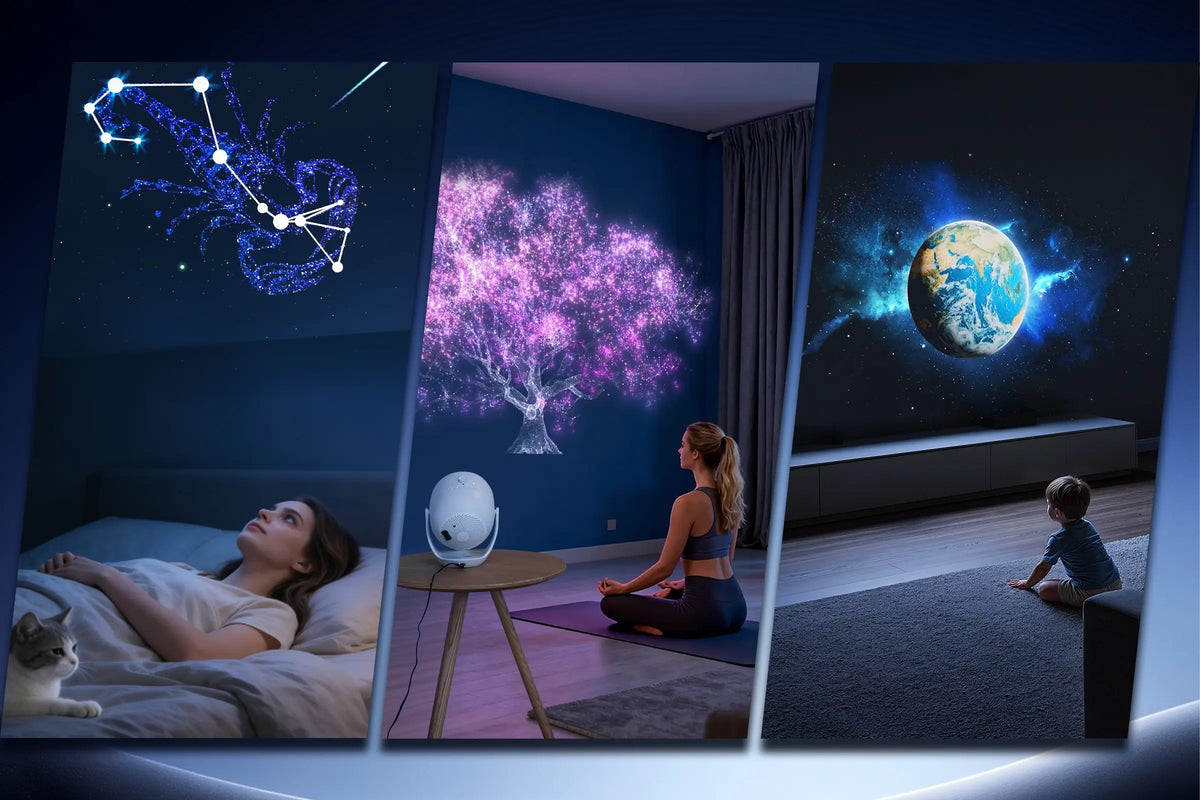
Instead of just dots, a galaxy projector projects full, colorful, animated scenes — nebulas, star clusters, auroras, ocean waves, forests, and more. It's not just stars; it's entire worlds.
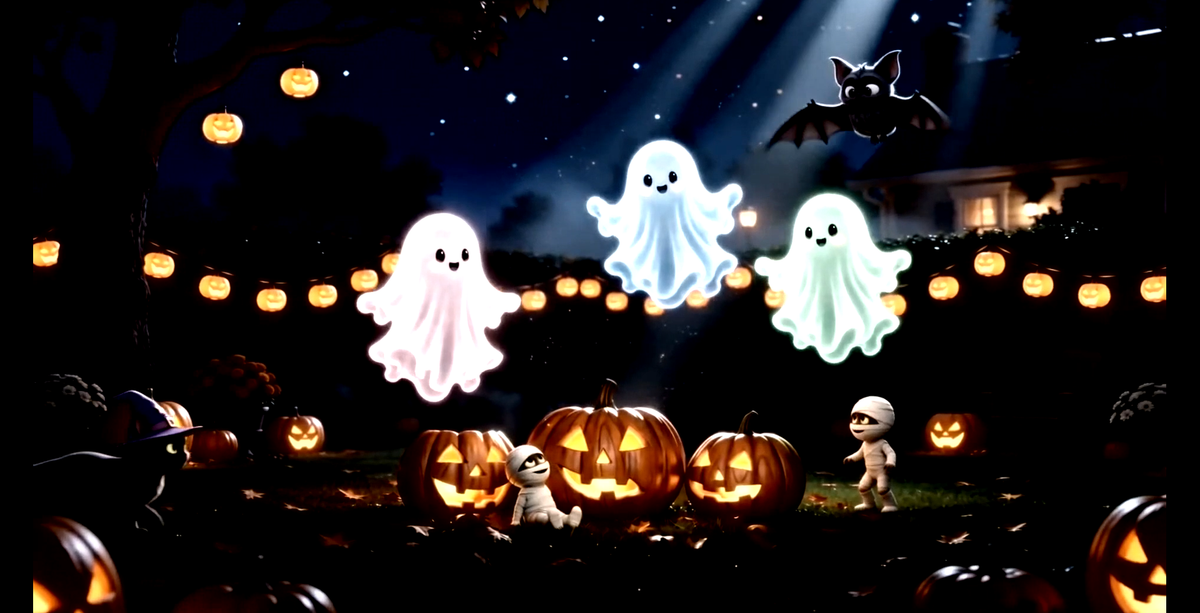
The Twelvetooo 3D01, for example, is a 3D holographic star projector that offers 90+ 3D animation themes — from space and oceans to forests and festivals. Each theme is a dynamic 3D video with real spatial depth, rendered in 4K high-saturation projection.
What you get: Moving, layered, colorful 3D scenes with depth and life. Nebulas that swirl. Oceans that roll. Forests that breathe.
What you don't get: Boredom. Flat images. The feeling that you're just looking at dots.
📊 Star Projector vs Galaxy Projector: The Side-by-Side
| Star Projector | Galaxy Projector (3D Holographic) | |
|---|---|---|
| What it projects | Dots of light (stars) | Full animated 3D scenes — galaxies, oceans, forests, festivals |
| Image type | Flat, 2D | Layered, 3D with real depth |
| Technology | LED/Laser through pattern disc | Molecular-grade nanotechnology + 4K optics |
| Number of scenes | 1-2 patterns (usually just stars) | 50+ dynamic 3D animation themes |
| Motion | Rotating dots (if motorized) | Smooth, cinematic animations |
| Immersion | "Stars on ceiling" | "You're inside the scene" |
| Glasses required? | No | No — glasses-free 3D |
🤔 So... Which One Should You Choose?
Here's the honest answer: it depends on what you're looking for.
Choose a star projector if:
- ✅ You just want some stars on your ceiling
- ✅ You're on a very tight budget
- ✅ You don't care about color, depth, or variety
- ✅ You're okay with a "good enough" experience
Choose a 3D holographic galaxy projector (like Twelvetooo 3D01) if:
- ✅ You want an immersive 3D experience, not just dots
- ✅ You value variety — different scenes for different moods
- ✅ You want 4K-quality visuals with real depth and color
- ✅ You're looking for a sleep aid, meditation tool, or party atmosphere
- ✅ You want a device that grows with you — not something you'll get bored of in a week
🎯 The Bottom Line
The difference between a star projector and a 3D holographic galaxy projector is the difference between looking at a photo and stepping into a world.
If you just want some stars on your ceiling, a basic star projector will do the job. They're cheap, they're simple, and they technically give you "stars."
But if you want to feel like you're lying under a real night sky — if you want forests that breathe, oceans that roll, and galaxies that pull you into their depths — that takes more than a pattern disc. That takes a 3D holographic star projector like the Twelvetooo 3D01.
Because the difference between a projector and an experience isn't the light. It's the depth.


Share:
What Exactly Is the 3D Video Inside Twelvetooo 3D01? (And How to See It for Yourself)
Bring the Magic Outdoors: Transforming Your Garden, Patio & Campsite